Articles
Page 4 of 4. Back to the most recent
- Visual AI transforms retail store operationsRetail and convenience store operators face many challenges, including labor shortages, traffic management, theft/pilferage, and customer/employee safety. Also, unlike online retailing, which is replete with data on everything from sales performance and returns to evolving customer preferences, physical stores often do not have access to such data. They can’t easily track and measure individual touchpoints between customers and the business, key information for improving customer experience and store profitability. Artificial intelligence (AI) is uniquely poised to change this scenario and has begun doing so for several companies Avathon has worked with in recent years.
- AI optimizes battery energy storage system performanceWith renewable energy asset deployment rapidly growing to meet ambitious carbon-reduction goals, the success of wind and energy generation depends increasingly on the ability to store energy to meet inconsistent demand swings. That goal is achieved using battery energy storage systems (BESS), which are fast becoming a crucial component of renewable project success. As battery storage has grown in recent years—expected to total 30 GW by the end of 2024 in the U.S.—there is an equally growing need for solutions to monitor and maintain these complex assets. To deliver on their many benefits, BESS systems—like all technology assets—require continuous performance tracking and occasional maintenance.
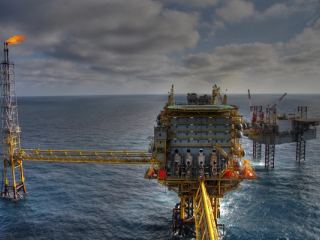
- Industrial AI streamlines oil and gas operationsOver the past decade, the oil and gas industry has made major investments in artificial intelligence, identifying a wide range of opportunities for operational improvement as a result.
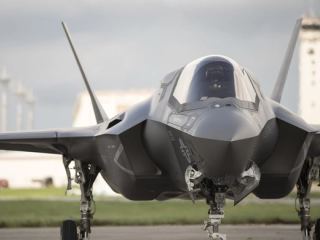
- How can warfighters use AI to improve military supply chain management?“In today’s rapidly evolving defense manufacturing and operations landscape, maintaining an agile and resilient supply chain is more important than ever. Leveraging cutting-edge artificial intelligence (AI) and machine learning (ML) technology, our team empowers the DoD and Defense Primes to mitigate disruptions by proactively identifying risks and optimizing logistics and supply chain operations.”
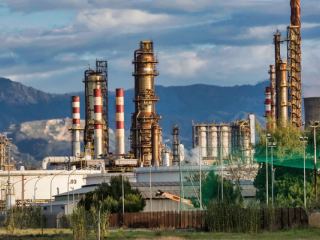
- Industrial AI boosts CPG sustainabilityFew industries adapt as quickly to consumer wants and needs as manufacturing. As goods like food, beverages, and household products require routine replacement or replenishment, consumer-packaged-goods (CPG) manufacturers must be at the top of their game throughout the entire supply chain process to meet and exceed those needs while also maintaining product quality.
- Visual AI improves oil & gas safetyThe International Association of Oil and Gas Producers created a set of rules designed to minimize the number of fatal accidents happening at oil & gas work sites. The IOGP asserted that more than 375 lives would have been saved over the previous decade had these rules been followed. Visual AI, in combination with Avathon Industrial AI platform, plays a large role in keeping oil & gas operations safe. Health, Safety, and Environmental (HSE) management programs utilizing Industrial AI solutions are critical to making sure oil and gas operations adhere closely to the IOGP’s rules.
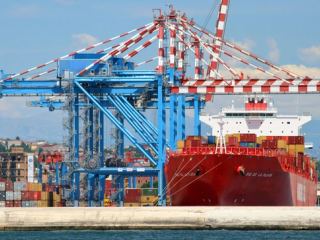
- How can AI optimize supply chain performance?Unexpected spikes in demand, a lack of workers in factories, and out-of-balance shipping operations can all lead to compromised supply chain performance. The increasing variety of goods offered to consumers also require shippers to operate with as much agility as possible in the face of countless day-to-day challenges. Artificial intelligence (AI) and machine learning (ML)
- Normal behavior modeling: prescription for performanceNormal behavior modeling (NBM) is an approach to process, system, and equipment management and maintenance enabled by recent advances in industrial artificial intelligence (AI) and machine learning (ML). NBM is applicable to a wide range of operational fields-–in practice, any in which normal operation can be quantified from available data.
- Looking into AI asset performance management for renewables? It’s all about the dataA few weeks back we began exploring the role of Asset Performance Management (APM) systems and their impact on renewable power generation. To gain further insight into this technology, we turn once again to a recent Avathon analyst interview in which this relationship was investigated in depth. Although the many benefits of artificial intelligence (AI)
- Can normal behavior modeling optimize asset performance?The goal of any company is to employ assets to maximize production and revenue. So it’s crucial to manage expenses by minimizing routine or unscheduled maintenance. It all boils down to increasing the useful life of expensive capital equipment. Historically, these goals have been pursued using condition-based monitoring (CBM) solutions or OEM-provided asset management tools.
- How can AI minimize critical drilling rig failures?Offshore drilling is an expensive business. Downtime can make those costs balloon exponentially. According to research firm Kimberlite, the average offshore drilling rig experiences 27 days of unplanned downtime annually, resulting in about $38 million in losses. Companies are beginning to look to rig maintenance powered by artificial intelligence to drive down these costs.
- Asset performance management systems utilize AI to power renewable solutionsArtificial Intelligence (AI) technology has delivered a wide range of compelling benefits to industry, arguably the most impactful of which has been the ability to predict the failure of expensive assets and prescribe actions that can mitigate, or even eliminate, these failures.
- Visual systems use the power of AI to maximize effectivenessArtificial Intelligence (AI) is now seemingly everywhere. It’s in the news nearly every day: self-driving cars, the latest ChatGPT release, algorithms that accurately predict equipment failures or select stocks for your 401k, behind-the-scenes software that completes your text sentences for you. It’s inescapable and will only become more so in the years to come. Many grandiose claims are made each day about how AI will make all our lives better: less manual work; more timely, accurate outcomes; even a 21% increase in U.S. GDP by 2030. So why are only about a third of companies actively using the technology today?
- Aging global infrastructure and the role of AIMuch attention has been focused in recent years on our national infrastructure, particularly following passage of the $1 trillion Bipartisan Infrastructure Law in 2021. Much of our current infrastructure was built several decades ago and now shows signs of severe wear and degradation.
- Visual AI: delivering real-world HSE valueDespite endless efforts to minimize workplace accidents, injuries, and deaths, there were more than 2.8M work-related injury and illness cases in 2022. Workplace fatalities increased by 7.5 percent from 2021 to 5,486. Farming, fishing, and forestry had the highest fatality rates, with construction and extraction jobs a close second place. What more can we do to mitigate this trend and proactively identify and address the root causes of safety incidents, injuries, and deaths in the workplace? Can artificial intelligence in the workplace be the solution?
- Artificial intelligence and the future of laborHow will artificial intelligence impact the future of labor? To some workers around the country, AI is a bad word. They’ve learned that artificial intelligence will take their jobs, but the reality is quite different.