Articles
Page 2 of 4. Back to the most recent
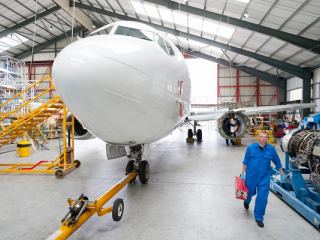
- From Reactive to Proactive: How AI is Redefining the Future of MROIn the high-stakes world of aviation, Maintenance, Repair, and Overhaul (MRO activities have, in recent years, shifted from a reactive model to a proactive, data-driven strategy designed to ensure the maximization of service levels and resource utilization while minimizing operating risk, to both workers and assets. Artificial intelligence (AI) is the engine behind this evolution, focusing on minimizing Aircraft on Ground (AOG) time and maximizing worker and passenger safety. The future of MRO isn’t just about turning wrenches; it’s about maximizing the value of all available data. In an industry where every second of downtime is a line item on the balance sheet, the choice is simple: evolve your intelligence or get left on the tarmac.
- Beyond the Breakdown: AI Keeps Watch Over Industrial AssetsAI-enabled asset performance management (APM) is predicated on two important capabilities: prediction and prescription. The former provides proactive insights into when failures are about to take place and when, while the latter tells operators what they can do to either prevent the failure or best manage their response to minimize process disruptions along the way. Both of these important capabilities are, however, built upon a critical foundation, i.e., the fact that assets do not operate throughout their lifetimes the same as they did the day they left the factory. Assets age, parts wear out, maintenance takes place, hostile operating environments take their toll.
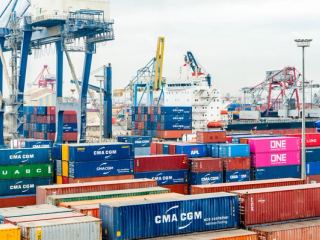
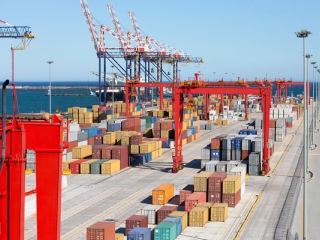
- Optimizing Maritime Shipping Operations in a Fast-Changing WorldOptimizing maritime shipping is no longer about plotting the “shortest route” on a chart; it’s about navigating the high-stakes convergence of geopolitical volatility, decarbonization regulations, and tariffs in chokepoints like the Panama Canal, Suez Canal, and the Strait of Hormuz. This has forced a rethink of operating practices that has paved the way for augmenting key maritime shipping functions with artificial intelligence (AI). In this fast-changing landscape of rising costs, strained supply chains, and uncertain shipping routes—and given that over 80% of the world’s trade volume is carried by sea—optimization requires a shift from reactive logistics to predictive intelligence.
- AI Fuels Oil and Gas Industry PerformanceFor years, oil and gas companies have leaned into digital transformation initiatives in an effort to deliver their products more efficiently and cost-effectively, ensure regulatory compliance, improve worker safety, and achieve sustainability goals. Operating data should lead to better business intelligence that empowers teams and improves profitability. Converting your operating environment’s deluge of data into real-time insights requires capabilities only artificial intelligence (AI) can deliver. The Avathon Autonomy Platform uses the power of AI to significantly reduce operating and capital costs while improving exploration and production efficiency for oil and gas operators.
- AI and Electric Power: New Model for an Old IndustryThe power and utility industry faces disruption from the accelerating growth of wind and solar generation, massive infrastructure investment requirements, environmental concerns, and rapidly growing energy demand from data center construction and vehicle electrification. In 2026, the relationship between artificial intelligence (AI) and electric utilities has become a “virtuous cycle.” While AI-driven data centers are creating unprecedented surges in power demand, the utilities themselves are deploying AI to manage that very complexity and demand. The role of AI has shifted from experimental pilots to agentic operations—autonomous or semi-autonomous systems that coordinate across the entire grid to ensure reliability and efficiency.
- AI and Battery Storage: Realizing the Promise of RenewablesRenewable energy is growing at a terrific pace to meet ambitious carbon-free generation goals, and the success of wind and solar electricity projects worldwide depends increasingly on the ability of operators to store that energy and deliver it at times when renewable generation is not occurring. AI enhances visibility across the entire lifecycle of renewable assets—both generation and storage—increasing performance while preventing unexpected component failures. Avathon’s Autonomy Platform helps to improve efficiency, reduce operating costs, and increase profitability for BESS operators, enabling them to stay as competitive as possible in a fast-changing marketplace.
- Visual Artificial Intelligence: Seeing the Future NowOne of the most powerful—and talked about—capabilities of artificial intelligence (AI) in industry today is the technology’s ability to analyze images, both static and video. When used in conjunction with closed circuit television (CCTV) cameras, these purpose-built AI applications enable computer systems to automatically capture and instantly extract meaningful insights from photographs and video imagery, training machines to understand the visual world in much the same way humans do. With AI-powered visual solutions, companies evolve from being reactive to proactive to predictive, realizing greater value at every step in the process.
- AI Keeps Aerospace Assets FlyingThe aerospace industry faces enormous operating and cost pressures. Manufacturers are challenged to scale production while simultaneously innovating new products and meeting uncompromising quality standards. Supply chain managers must deal with diminishing manufacturing sources and material shortages, long lead times, and geopolitical or trade-driven sourcing limitations. With Autonomy for Aerospace Operations, Avathon empowers the aerospace industry to optimize all elements of the aviation lifecycle—from build to maintain to sustain—preserving efficiency and resilience, ensuring fleet readiness in an era of continuing political/regulatory change and economic constraint.
- The Secret of AI Success: the Human-AI PartnershipTo achieve successful AI implementations in 2026, organizations must move beyond treating technology as a standalone feature and instead prioritize a deep Human-AI Partnership. While AI agents are capable of automating mundane, high-transaction tasks through “Networked Intelligence,” the ultimate success of these initiatives hinges on the strategic vision and institutional knowledge that only humans provide. The path to a resilient, profitable future is clear: it starts with a relentless, strategic focus on data quality, seamless end-to-end integration, and a commitment to empowering the workforce through the human-AI partnership.
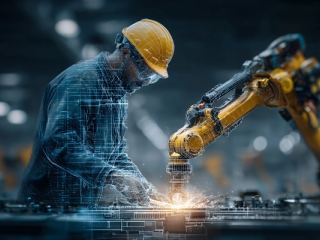
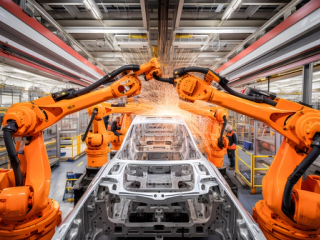
- AI and the Industrial Productivity RevolutionProductivity is about accomplishing more using fewer resources, including humans, materials, and energy. AI improves industrial productivity by acting as a force multiplier, shifting manual labor to human oversight. Productivity is enhanced not only by doing things faster, but by enabling systems to be self-healing, predictive, and highly adaptive. AI boosts industrial productivity by automating repetitive tasks, enhancing quality control, and optimizing supply chains, with potential for up to 50% productivity gains in manufacturing. It enables predictive maintenance to reduce downtime, improves data analysis for faster decision-making, and supports sustainability efforts.
- Data Centers and AI—Where’s the Power?The current massive growth phase of construction virtually ensures that local grids will continue to struggle to keep up with data center interconnections—meaning that AI-driven power management is no longer optional; it is a prerequisite for data center operating success. Ultimately, safe and effective power management will be a team effort involving the utility, grid operator, and data center management. The energy management tools enabled by AI tools like Avathon Autonomy for Power & Utilities Operations ensure that the net result will be not only sustainable but will also effectively meet the processing needs of a world of AI users.
- Global Trade Management—The Endlessly-Moving BarAI has, in recent years, evolved from a “useful tool” to a “digital partner” in Global Trade Management. With the current volatility in U.S. trade policy—specifically the frequent shifts in tariff rates and the emergence of new trade deals like the Taiwan Semiconductor agreement—AI is now the primary capability businesses need to stay compliant and profitable. The global trade landscape is changing dramatically and rapidly, with no end in sight, and with profound consequences for global companies, whether on the importing or exporting side of things. Avathon Autonomy for Global Trade Management delivers the functionality trade professionals need to ensure compliance and minimize operating costs.
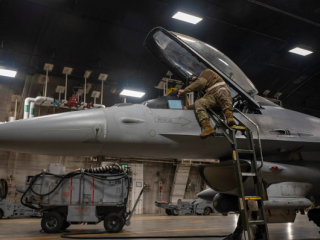
- Ensuring Defense Asset Readiness with AITo meet the challenge of delivering high readiness rates, whether it’s for the USAF’s F-16 and C-17 fleets, the Navy’s surface vessels, or the Army and Marine Corp’s ground and air assets, defense maintenance teams require every tool available to keep platforms performing optimally, and artificial intelligence (AI) is at the top of that list of tools. AI’s unique ability to ingest and analyze vast quantities of real-time performance data, evaluate that data for incipient problems, and make targeted maintenance recommendations enables maintainers to have confidence in the readiness of the fleet when they are called upon to deploy to forward locations.
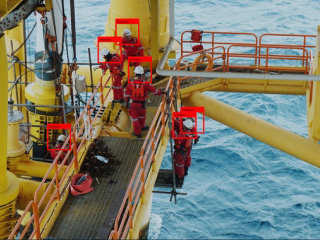
- Autonomy and the Case for Industrial Health and SafetyFor as long as there has been work to be done, there have been hazards associated with doing it. Whether these hazards take the form of falls, interactions with vehicles and heavy equipment, or exposure to chemicals or other substances, a critical challenge of modern industrial organizations across the globe is ensuring the safety of workers and individuals living near industrial sites and workplaces. With the emergence of artificial intelligence (AI) in recent decades, industry leaders are now employing this technology in a wide range of ways to further minimize health, safety, and environmental (HSE) risks, enhancing worker safety while maximizing productivity.
- Why Data Quality is the True Engine of AI SuccessIn boardrooms across the globe, Artificial Intelligence (AI) is being lauded as the single greatest transformation engine for efficiency, resilience, and competitive advantage in a generation in supply chain. Yet, for every success story, the reality is stark: 95% of enterprise AI projects are a complete failure, representing billions of dollars being “lit on fire” with no measurable return on investment. This profound gap between promise and reality has one single, non-negotiable cause: a broken foundation rooted in low-quality data. To move past this crisis, supply chain leaders must shift their focus from the complex AI algorithms to the simple truth: data is the lifeblood of the modern supply chain.
- Energy and AI: Powering Up IntelligenceFresh off Reuters EnergyLIVE 2025 in Houston, we’re still digesting everything we heard and learned about the current state of the energy industry and the issues on the minds of industry leaders. Key challenges and opportunities of course vary depending which industry you happen to work for (oil and gas, electric power, renewables), but there are definitely some consistent themes that emerged from our discussions with line-level managers and executives from these verticals. It will not come as a surprise to hear that top issues center around operating and capital costs, particularly given the parlous state of the economy throughout much of this year and prospects for the coming year.
- AI Powers Operating Performance in the Oil and Gas IndustryThe oil and gas industry faces profound challenges due not only to the rapid growth in renewable energy and EVs, but also the accelerating pace of technology. AI creates immense value in the operating areas unique to each major energy sector, but there is also significant opportunity for value creation that spans the full oil and gas value chain. Avathon’s Autonomy Platform for Oil and Gas Operations leverages the operating data that upstream, midstream, and downstream operators possess and turns that information into valuable insights that maximize asset performance, production outputs, and worker safety, all using the power of AI.
- Artificial Intelligence—A Prescription for Industrial Asset Performance OptimizationIndustrial companies spend billions annually purchasing, operating, and maintaining capital-intensive assets. Whether it’s oil platforms, manufacturing plants, power generation equipment, or wind turbines, the challenge is the same: keep your assets producing as economically and for as long as possible while driving maintenance costs down and ensuring product quality remains high. In years past that meant lots of preemptive maintenance to hedge against the possibility of asset failure, maintenance that in many cases was actually unnecessary and incurred undue costs, both in terms of work performed and productivity lost during that work.
- AI Drives Opportunity in South AsiaThe Asian subcontinent—and India in particular—presents vast and unique opportunities for Artificial Intelligence (AI) due to the area’s scale, diverse population, and strong government focus on digital transformation. Three specific industry verticals—manufacturing, aerospace, and energy—offer especially immense opportunities to leverage AI’s capabilities, supported by government initiatives like the “Make in India” and “Production Linked Incentive” schemes, as well as a strong focus on transitioning to Industry 4.0. AI is critical to these industries for its ability to improve product/service quality, lower operating and capital costs, and increase global competitiveness.
- Artificial Intelligence Optimizes MRO Operating PerformanceAvathon harnesses the power of AI to turn today’s MRO practices from statically planned and reactive to dynamically planned and proactive. Autonomy for MRO Operations enables users to rapidly detect emerging issues, prescribe the most effective actions, and align the entire maintenance ecosystem in real time. Autonomy for MRO’s wide-ranging feature set equips asset managers—whether aircraft, vehicles, manufacturing equipment, or energy providers—to extract the most value from their asset base while minimizing recurring and capital costs.
- Global Trade Management Demands World Class Autonomous CapabilitiesGlobal trade management regulations are a constantly moving target. In a trade environment as complex and fast-changing as the current one, the ability to quickly and flexibly adapt to changes is key to commercial success. Supply chains span international boundaries, and every decision on classification or tariff optimization includes potential compliance risk. Products must be delivered on time, in the required quantities, and at the expected cost. Avathon Autonomy for Global Trade Management delivers on these unflinching demands.
- Keeping Aviation Assets Airborne in Turbulent TimesAvathon’s Autonomy for Aerospace Operations is an integrated artificial intelligence (AI) platform that analyzes supply chain, manufacturing, and maintenance data, delivering actionable recommendations that enable coordinated decision-making across the full range of end-to-end aerospace processes. By leveraging the full power of AI, leaders in the aerospace industry turn complexity into operational advantage—connecting manufacturing, maintenance, and supply chain data to better manage resource constraints, quality challenges, and parts availability for production or in-service fleets.
- Forcing the Pivot: What the End of De Minimis Means for Logistics ProvidersThe suspension of the de minimis exemption (Section 321) is a monumental shift for logistics providers—from giant express carriers like FedEx and UPS to the thousands of global freight forwarders—whose business models were optimized around high-volume, frictionless small parcels. The end of duty-free, minimal-paperwork entry is forcing a profound pivot from a speed-and-volume focus to a compliance-and-data-first approach. With the advances in AI, especially natural language processing and large language models, the industry can effectively deal with these changes.
- Agentic AI Amplifies Success in Logistics PlanningGrowth in global maritime logistics is forecast to grow at about 2.4% annually through the end of the decade according to the UN Conference on Trade and Development (UNCTAD). And growth across all global logistics is expected to increase at a CAGR of 7.2% from 2025 – 2030, according to a recent report by Grand View Research. But these growth projections have a counterpoint: The sector faces powerful headwinds in the never-before-experienced geopolitical challenges of tariff volatility, embargoes, war, and piracy—resulting in strategic gamesmanship being played out across global supply chains.